
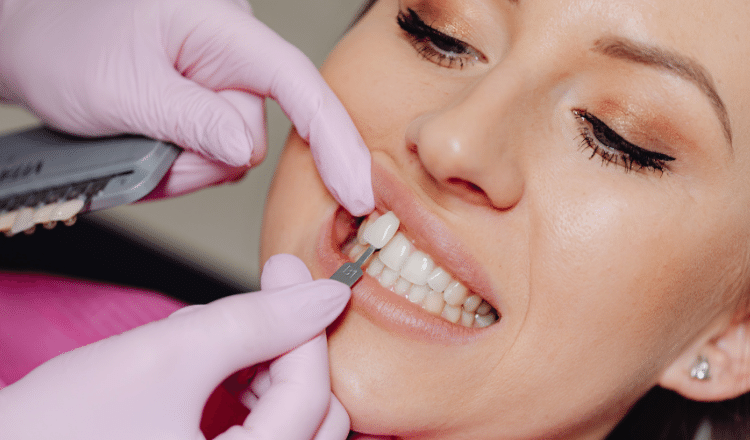
Porcelain Veneer
One of the most popular dentistry applications is porcelain tooth veneer, and porcelain tooth veneers with materials with high aesthetic value have very high satisfaction rates. This material, in the form of a thin shell placed on the teeth to hide cosmetic defects in the tooth, can be quite long-lasting when it comes to the appropriate patient and mouth structure. In cases where oral care is not sufficient; Just as there can be problems due to inflammation around natural teeth, there are also problems around dental veneers. This will directly affect the life of the treatment. Planning is very important as in all treatments.
Therefore, a detailed analysis is of great importance in terms of the permanence of an appropriate care treatment. Porcelain dental veneers can be made in various types. Usually, porcelains with old generation metal support come to mind first. However, there are zirconium supported porcelain veneers and full ceramic veneers that give much better results aesthetically. You can get detailed information about the dental veneer process with a detailed examination.
How is Porcelain Dental Veneer Made?
In the first stage, the patient’s opinions are taken by the dentist. The desired result with the porcelain tooth veneer process is determined in line with the patient’s demands. In some cases, if there are problems arising from the jaw structure, they may not be resolved with only porcelain treatment. The dentist starts the examination process to make the most accurate decision about whether the teeth are suitable for the veneer process. The patient is informed about the procedures to be followed during dental veneer. If necessary, radiological examination (x-ray) can also be taken. Again, if necessary, in digital systems or for the mouth; The post-treatment state can be observed approximately.
Porcelain Dental Veneer Preparation Stage
In order to complete the oral preparation before the dental veneer process, the dentist shapes the tooth surface in an amount almost equal to the thickness of the parts to be used in the veneer. The patient and the physician decide together whether local anesthesia will be applied during the preparation of the tooth surface for the veneer material.
The dentist takes tooth models from the patient to be sent to the dental laboratory. In the treatment process, a “temporary tooth” is prepared in case of deficiency and sensitivity problems. These coatings, which do not give as good aesthetic results as permanent ones, are temporary and will be discarded when the day comes. Temporary teeth prepared according to the measure taken are delivered to the patient on the same day. The finishing of permanent veneers may vary depending on the number of teeth and the situation in the rehearsals. The approximate process is between 3-10 days. At the rehearsal stage, the patient observes the relationship of the teeth with the lips and surrounding tissues, and arrangements are made according to their ideas.
