
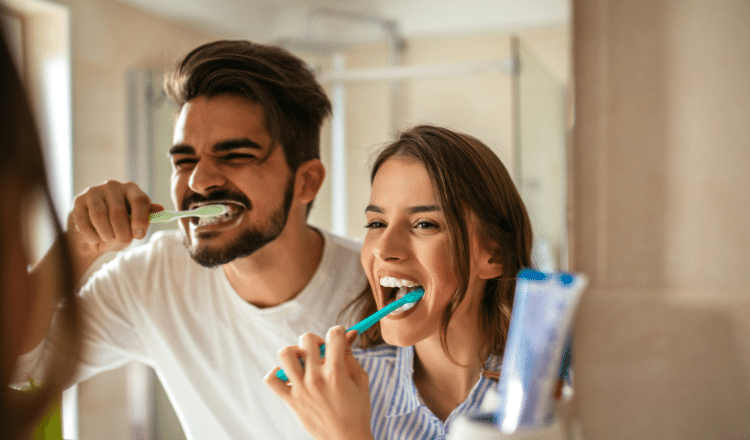
7 Mistakes You Make While Cleaning Your Teeth
1. Not brushing long enough
10 Mistakes You Make When Cleaning Your Teeth This is a classic crime – we recommend brushing your teeth for 2 minutes twice a day. This is 2 minutes before bedtime and at least once more during the day. According to the Academy of General Dentistry, the average person brushes their teeth for 45 to 70 seconds a day, which is 23 to 35 seconds if brushing twice a day, which is less than half the recommended time! We took a look at the effect of brushing your teeth for the recommended 2 minutes compared to a much shorter time, take a look at the results in our video here.
If you use a regular toothbrush, you can use the timer on your phone, watch or a small hourglass. Most electric toothbrushes “buzz” at 30-second intervals, so you can divide your mouth into 4 areas, top to bottom, left to right, and spend 30 seconds on each section.
2. Rinsing your mouth after brushing
A common mantra our hygienists repeat after brushing your teeth is “Rinse spitting out” (this includes rinsing with water and gargling). When you rinse your teeth, you also wash away the fluoride and enamel-protecting properties of the toothpaste.
This is often a hard habit to get used to, but as with any new routine, the longer you stick to it, the easier it gets.
3. Using the wrong toothpaste
While there isn’t a single “best” toothpaste for every person in the world, make sure your toothpaste contains fluoride and make sure it’s adequate – for adults, this is between 1,350 and 1,500 parts per million, which is read in ppm on the tube. Fluoride is key to helping prevent tooth decay. If you’re choosing vegan alternatives to toothpaste, make sure it contains fluoride (we have many vegan and eco-friendly toothpastes in stock, like the Humble range).
4. Brushing at the wrong time
The first thing you want to do after getting sick is reach for a toothbrush to get rid of the taste in your mouth. Don’t do that! Acid (think morning water) from getting sick, as well as from drinking or eating acidic foods, normally gets rid of the protective layer of saliva on your teeth, making brushing more abrasive on the teeth. We recommend waiting 30 minutes before brushing for this layer to heal (you can rinse your mouth with water or mouthwash to get rid of the taste).
At the other end of the scale of brushing at the wrong time is not brushing at all. A study by the British Dental Health Foundation found that 28% of Brits say they don’t brush their teeth every 24 hours, and 1 in 7 people say they sometimes don’t clean their teeth for more than two days! Your nightly cleaning is most important so you can remove buildup from eating and drinking during the day and the bacteria that cause both tooth decay and gum disease.
5. Brushing too hard
Using the wrong technique when brushing with a heavy hand can cause tooth wear and potentially recession of gums. Brushing harder won’t leave your teeth cleaner. Many electric toothbrushes have a sensor that makes the light flicker if you brush too hard. You want to brush the teeth at a slight angle rather than square, and focus on each tooth (tooth) instead of side-to-side brushing. Here’s a demonstration from one of our hygienists.
6. Using the wrong toothbrush
Manual or electric? The controversy is heating up… One thing we have noticed is that it is very difficult to clean wisdom teeth with a manual toothbrush and that is why people will often skip the back of their mouth, but an electric toothbrush can clean wisdom teeth much better without the need for you. to move your real brush too much. An electric toothbrush can also tell you that you’re putting too much pressure on your teeth and gums, and it’ll give you a little warning to know if you’ve been brushing your teeth long enough.
Be careful when choosing your bristles, whether electric or manual. These should be soft or medium rather than hard – you want to clean your teeth gently without damaging your teeth and gums. The same goes for the size of the brush, there’s no need for a larger brush head because it covers the surface of one tooth at a time (to make sure you clean every tooth effectively), not all of your teeth at once!
7. Not using an interdental brush
10 Mistakes You Make When Cleaning Your Teeth We recommend using an interdental brush with floss, if possible. While floss can reach between the gums, you still need an interdental brush to clean the edges of your teeth, a spot where your toothbrush and floss can be missing if used properly.
